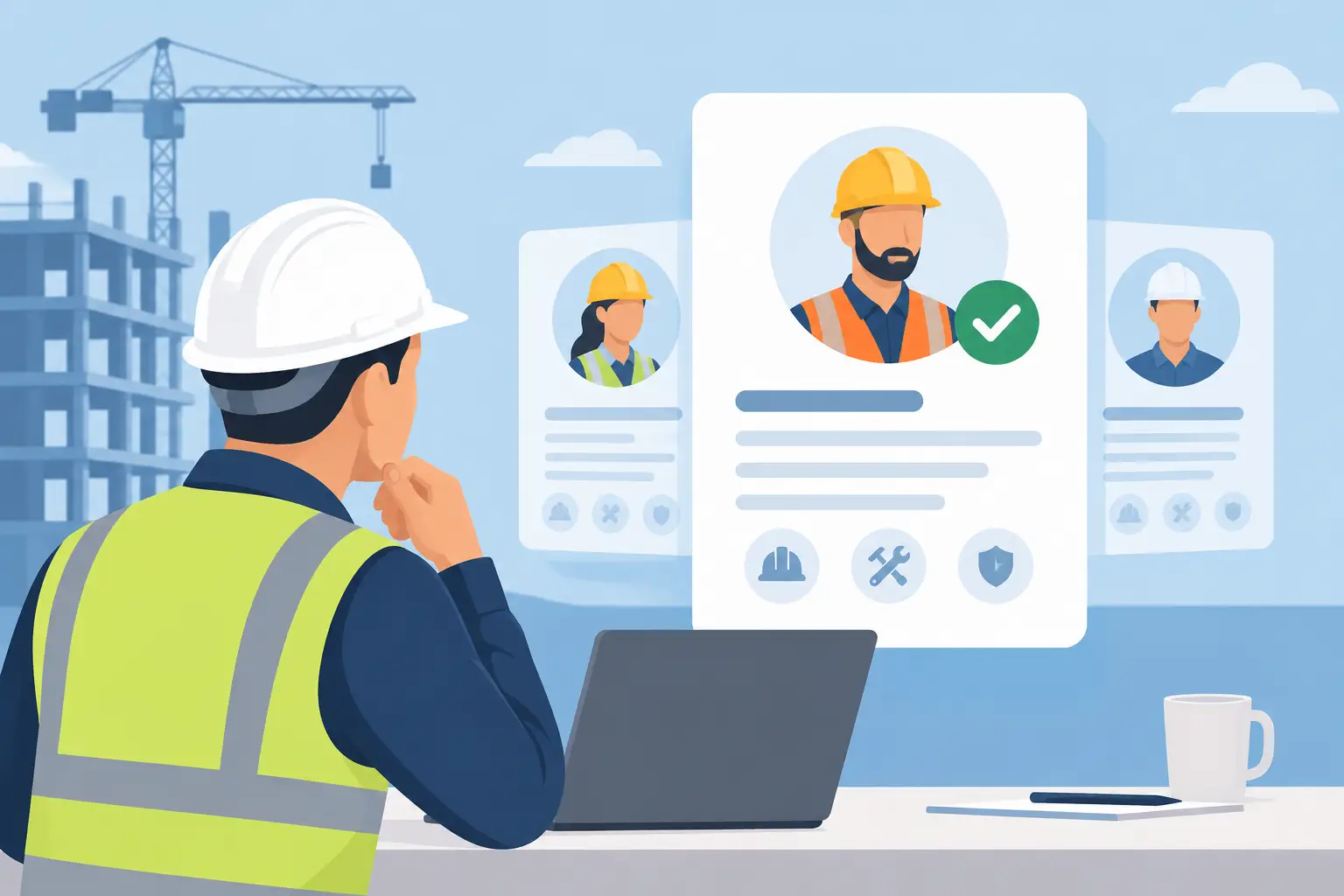

A superintendent gets a call at 6:15 a.m.: two electricians will not make it to the site, rough-in is scheduled to continue, and the drywall crew is waiting behind them. This is where on demand skilled labor stops being a recruiting concept and becomes a project-control issue. The question is not simply whether you can find people. It is whether you can put qualified, dependable tradespeople to work fast enough to protect the schedule, safety standards, and margin.
For construction companies, subcontractors, and trade employers, labor gaps are rarely convenient. A crew may be short because of a delayed project, a no-show, a seasonal rush, an unexpected scope change, or a new contract that moved from estimate to mobilization faster than expected. The right response is not to lower the hiring bar. It is to build a faster way to verify and engage the right people.
What on demand skilled labor actually means
On demand skilled labor is the ability to access qualified tradespeople when project needs change, without treating every hire as a long, slow recruiting cycle. It can support a short-term staffing need, a project-based crew expansion, or a permanent hire that needs to happen quickly.
That distinction matters. On-demand does not mean unvetted. It should not mean filling a role with the first available person, hoping they can perform once they arrive. In skilled trades, a bad fit can create rework, slow every crew working nearby, introduce safety exposure, and damage client confidence.
A strong on-demand hiring process gives employers visibility into the proof behind a candidate. That includes relevant licenses where required, work history, trade specialties, project experience, portfolio evidence, background information, and responsive communication. Availability is valuable. Verified capability is what makes that availability useful.
For tradespeople, the model creates a more direct path to work. Instead of relying entirely on word of mouth or sending applications into a generic job board, an electrician, welder, plumber, carpenter, HVAC technician, or mason can present their experience in a format that employers can evaluate quickly.
Why labor shortages hit job sites harder than offices
A vacant role on a job site is not an empty seat. It changes the sequence of work.
If a qualified HVAC technician is missing, a commissioning milestone may slip. If a framing crew is short, following trades lose access to their work areas. If a certified welder is unavailable for a critical repair, equipment or structural work can sit idle. The cost grows beyond the missing worker's hours because construction projects depend on coordinated handoffs.
That is why speed matters, but it is only one part of the equation. Employers need people who understand the type of work, can meet site requirements, communicate clearly, and arrive prepared to contribute. A residential service plumber and a commercial new-construction plumber may share a trade title while bringing very different experience to the job.
The more specific the need, the more useful a trade-focused hiring system becomes. Job titles alone do not tell the full story. Employers need to define the project, tools, certifications, shift expectations, location, duration, and the exact skills that separate an acceptable candidate from the right one.
Build a faster hiring workflow without cutting corners
The best way to use on-demand talent is to decide what “qualified” means before the emergency arrives. Waiting until the crew is already short makes it easier to compromise on details that matter.
Start by creating a practical role profile for the positions you regularly need. Avoid vague descriptions such as “experienced electrician needed.” State the work clearly: commercial tenant improvement, industrial maintenance, low-voltage installation, conduit bending, panel work, or service calls. Include required credentials, expected schedule, location, pay range when possible, and whether the role is temporary, project-based, or permanent.
Then use a simple screening sequence that is fast enough for field operations:
- Confirm the candidate's trade experience and the type of projects completed.
- Validate licenses, certifications, and work authorization requirements relevant to the role.
- Review project portfolios or work examples when visual proof helps assess craftsmanship.
- Speak directly before assigning the worker, especially for safety-sensitive or lead-level roles.
This process should be consistent, not overly bureaucratic. A one-day need may call for a streamlined review. A foreman, lead technician, or long-term hire deserves a deeper conversation. The right level of screening depends on project risk, scope, and how much supervision the role will require.
Match for the job, not just the trade
Two candidates can both be qualified carpenters and still be wrong for the same opening. One may excel at finish work in occupied healthcare facilities. Another may be strongest in production framing on multifamily projects. Hiring gets better when teams match the person to the environment, not just the trade category.
Look for evidence in four areas: technical fit, site fit, reliability, and communication. Technical fit covers tools, systems, materials, and project types. Site fit includes travel distance, shift availability, union or non-union requirements where applicable, and familiarity with commercial, residential, industrial, or public work. Reliability shows up in employment history, references, ratings, and responsiveness. Communication matters because field conditions change quickly and unclear expectations waste time.
AI-powered matching can accelerate the first pass by identifying candidates whose profile data aligns with a role. It is most effective when the job post is specific and profiles are current. Technology can narrow the field quickly, but the final decision should still account for the realities of the site and the judgment of the hiring manager.
Give tradespeople a better way to prove their value
The skilled labor market works better when workers can show more than a job title and a few dates. A strong professional profile gives tradespeople a chance to document licenses, specialties, years in the trade, safety training, equipment experience, and completed projects.
A project portfolio is especially useful in visual and craftsmanship-driven work. Photos of finished millwork, masonry, custom fabrication, mechanical installations, or electrical panels can help employers understand the standard of work a candidate delivers. The goal is not a polished corporate resume. It is credible proof that helps a hiring manager make a confident call.
Workers should also treat response time as part of their professional reputation. When a company needs to staff a job quickly, a delayed reply may mean a missed opportunity. Keep availability current, answer messages promptly, and be direct about desired pay, travel limits, and the kinds of projects you want. Clear information saves time for everyone.
Where on-demand hiring can go wrong
Fast hiring does not solve every workforce problem. If compensation is below the market, the commute is unreasonable, site conditions are poorly managed, or the job description does not match the actual work, even a strong candidate pool will not fix the issue.
Employers should also avoid using on-demand staffing as a substitute for workforce planning. A platform can help fill immediate gaps, but recurring shortages in the same role may signal a larger problem with retention, forecasting, crew development, or bidding strategy. Review why the shortage occurred after the project pressure has eased.
For workers, flexibility has trade-offs as well. Project-based work can create access to more opportunities, but it requires careful attention to job duration, overtime expectations, benefits, travel, and payment terms. A better job is not just the first offer. It is the role that fits your skills, goals, and working reality.
Make speed and trust work together
The construction industry does not need another generic hiring process built around office roles. It needs tools that reflect how field hiring actually works: credentials matter, project history matters, and a delayed response can affect an entire schedule.
go2work is built around that reality, connecting employers with verified skilled tradespeople through trade-specific profiles, portfolio-driven candidate reviews, validation tools, and direct mobile communication. The outcome is a more practical path from open role to productive worker.
When the next labor gap threatens a critical milestone, do not start with a rushed search and a vague job post. Start with a clear definition of the work, the proof required, and the person who can step onto the site ready to earn trust. That preparation turns urgent hiring from a scramble into a repeatable advantage.