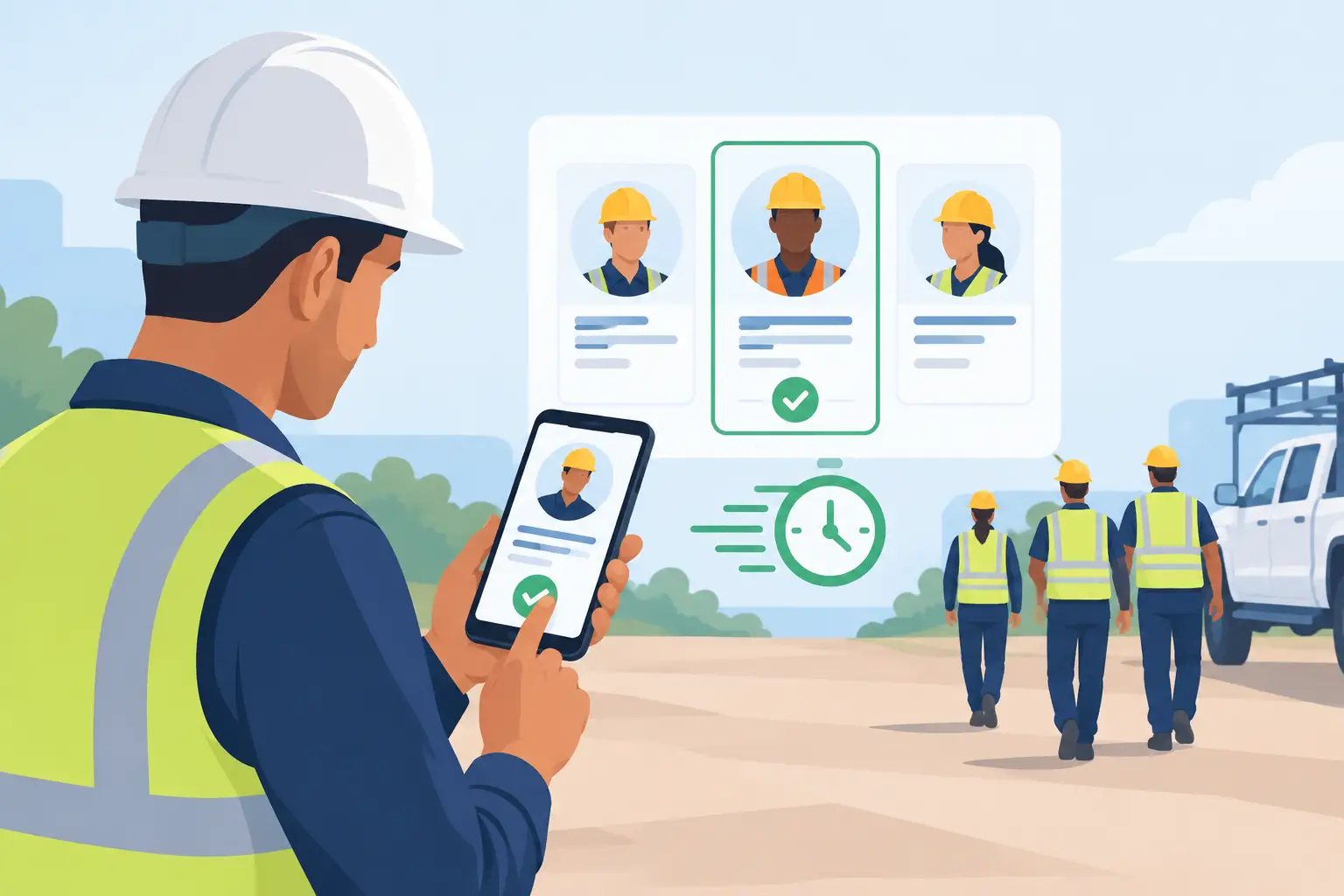

A stalled crew is expensive. So is putting the wrong person on a job that requires a license, a specific certification, or proven experience with a particular system. Construction employment is not just about filling an open role. It is about putting qualified people on the right project quickly enough to protect the schedule, the budget, and the quality of the work.
For employers, the pressure is constant: bid work, mobilize crews, replace no-shows, and keep experienced foremen from spending their mornings sorting through unqualified applications. For tradespeople, the challenge is different but just as real: finding jobs that match their skills, pay fairly, and offer a clear path forward. Better hiring starts when both sides can see the proof behind the profile.
Why Construction Employment Is a Project-Critical Function
In many industries, a vacant role creates inconvenience. In construction, it can stop production. One missing electrician can delay rough-in. A shortage of certified welders can push back fabrication. A crew without the right HVAC experience may need extra supervision, adding labor hours before the work is even complete.
That is why the old approach of posting a job, waiting for resumes, and hoping for the best is no longer enough. Construction firms need a hiring process built around the actual conditions of field work: changing project timelines, trade-specific qualifications, local labor availability, safety requirements, and the need to know who can show up ready to work.
The strongest hiring teams treat workforce planning as part of operations. They do not wait until a superintendent is short-handed to begin searching. They maintain visibility into upcoming labor needs, keep a pipeline of proven workers, and move quickly when a project requires additional capacity.
The Cost of Hiring on Assumption
A candidate may look qualified on paper but lack the specific experience the job requires. A plumber who excels in residential service work may not be the right fit for a large commercial build-out. A carpenter with finish expertise may not have the production framing background needed to keep a multifamily project on pace.
This does not make either worker unqualified. It means construction hiring needs more context than a job title and a short work history. Employers need to assess licenses, certifications, completed projects, equipment familiarity, safety record, availability, and work preferences. Workers need a way to present that information clearly, without relying on a generic resume to do all the work.
What Employers Need From a Construction Hiring Process
Speed matters, but speed without verification creates risk. The goal is not simply to make a fast hire. The goal is to make a fast, informed hire that holds up once the worker arrives on site.
Start by defining the job in field terms. Instead of asking for a "skilled electrician," clarify whether the role calls for a journeyman license, commercial tenant-improvement experience, conduit bending, panel work, low-voltage familiarity, or a worker who can lead an apprentice. Specific requirements attract better matches and reduce wasted conversations.
Next, decide what is non-negotiable. Licensing, safety credentials, background requirements, union status, travel availability, and reliable transportation may be essential. Other factors, such as experience with a particular brand of equipment, may be trainable. Separating must-haves from preferences helps hiring managers avoid rejecting a strong candidate for the wrong reason.
A practical process also creates a clear response standard. If a qualified worker applies on Monday and hears nothing until Friday, that worker may already be committed elsewhere. Trade hiring is competitive, especially when projects are active and experienced workers have options. Fast communication is part of the offer.
Verify Before the First Day
Verification should happen early, not after a candidate has been promised a start date. Confirm credentials, relevant work history, and any requirements tied to the role. Review project portfolios when available. A portfolio can show the type and scale of work a person has completed in a way a resume cannot.
Background checks and employment validation should be handled consistently and in line with applicable laws and company policy. The point is not to add unnecessary friction. It is to reduce surprises that can lead to last-minute cancellations, rework, or safety exposure.
For urgent jobs, employers often face a trade-off: hire the first available person or invest a little more time to find the right fit. The answer depends on the task. For low-risk support work, availability may be the top priority. For specialized, regulated, or safety-sensitive work, qualifications and proof should lead the decision.
How Tradespeople Can Compete for Better Opportunities
Construction employment rewards people who make their skills easy to understand. The best workers are not always the best at writing resumes, and they should not have to be. But they do need a professional profile that shows what they can do.
Start with the basics: trade, years of experience, location, license status, certifications, and availability. Then add the details that help an employer picture you on the job. List the types of projects you have worked on, such as hospitals, multifamily housing, retail build-outs, industrial facilities, custom homes, or public infrastructure.
Photos of completed work, where appropriate and permitted, can strengthen a profile. So can a short description of your role. Did you install the system, lead a crew, read plans, coordinate with other trades, handle punch-list work, or troubleshoot complex issues? Those details show more than a title ever could.
Reliability also belongs in the picture. Employers need people who communicate, arrive prepared, follow site rules, and finish the work. Strong ratings, verified experience, and professional references can help a tradesperson stand out when several candidates have similar technical backgrounds.
Ask Better Questions Before Accepting a Job
A good job is not just a pay rate. Before committing, ask about the project location, expected duration, schedule, overtime, scope of work, crew structure, tools, safety requirements, and who you will report to. If travel is involved, confirm the details around per diem, lodging, and transportation.
Workers should also be honest about fit. Taking a job outside your experience may create short-term income, but it can damage your reputation if you cannot perform safely or meet production expectations. The better move is to pursue work that builds on your existing strengths while creating a credible next step in your career.
Technology Should Reduce Hiring Friction, Not Add It
Construction teams do not need another system that requires hours of training before it delivers value. They need tools that work from the field, make candidate information easier to assess, and keep conversations moving.
That means mobile-first communication, clear job details, verified worker profiles, and matching that reflects real trade requirements. AI-powered matching can help narrow a large pool of candidates, but it should support human judgment rather than replace it. A hiring manager still needs to understand the project, the crew, and the stakes of each role.
Platforms built specifically for skilled trades can make that process more practical. go2work helps employers connect with verified tradespeople through job postings, project portfolios, credential validation, and direct messaging, while giving workers a stronger way to present their experience and pursue better-fit opportunities.
Build a Labor Pipeline Before You Need One
The best time to recruit is not when the crew is already short. Keep records on workers who performed well, even if there is no immediate opening. Stay connected with candidates who were a close second. Review staffing needs during preconstruction and at key project milestones, when scope changes and schedule pressure often create new labor demand.
A dependable pipeline should include a mix of known performers and new talent. Relying only on the same small group can limit growth. Relying only on new applicants can create uncertainty. The right balance depends on project complexity, available supervision, and how quickly work is expected to ramp up.
Construction employment works best when hiring is treated as a field operation: specific, responsive, and accountable. Give qualified people a clear path to the work. Give employers proof before the first day. When the match is right, crews gain momentum, workers gain opportunity, and the project has a better chance of finishing the way it was planned.